
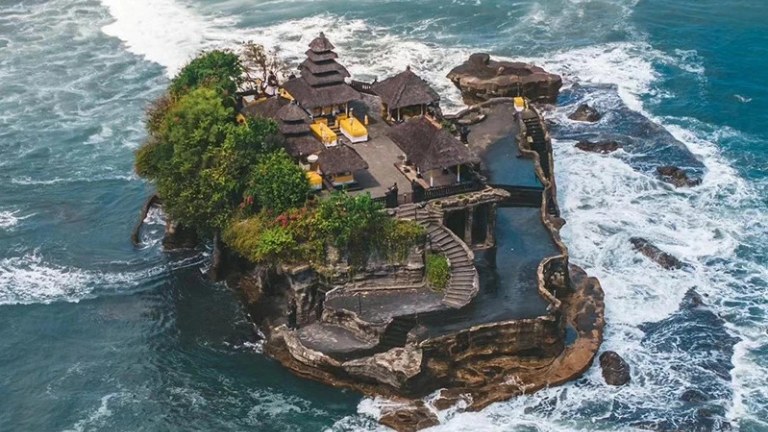
Tanah Lot Temple, or Pura Tanah Lot, is a 16th-century Balinese Hindu sea temple built on a rock formation just off the coast of Tabanan, Bali, famous for appearing to float above the ocean at high tide and for being one of the island’s most iconic sunset viewpoints. It was founded by the Hindu priest Dang Hyang Nirartha and is dedicated to the guardian spirits of the sea, forming part of a chain of sea temples along Bali’s southwestern coast. Today, Tanah Lot remains one of the most visited and photographed temples in Bali, drawing both worshippers and travelers for its dramatic setting.
Having worked in Bali tourism for over 30 years, I’ve brought thousands of visitors to Tanah Lot for sunset, and the details people usually don’t know, the real history, the tide timing, and how to avoid the worst crowds, make a real difference in how much you actually enjoy the visit. Here’s the full picture.
What is Tanah Lot temple?
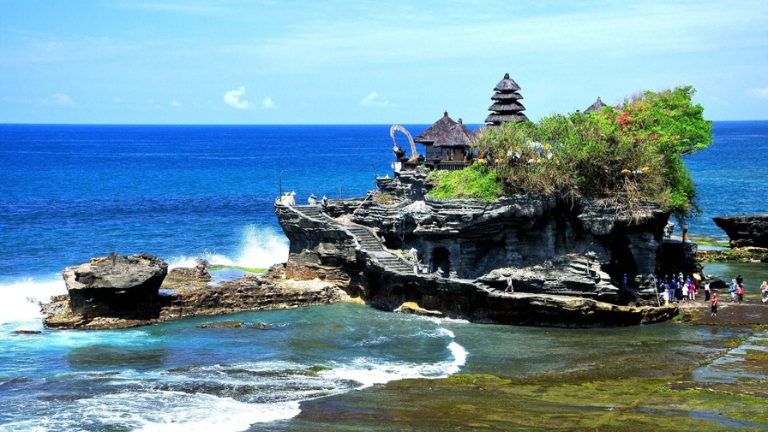
Tanah Lot temple is a Balinese Hindu sea temple built on a small rocky outcrop just offshore in Beraban village, Tabanan regency. It’s one of Bali’s seven key sea temples (pura segara), historically positioned along the coast to form a spiritual chain protecting the island.
Where is Tanah Lot temple located?
Tanah Lot is located in Tabanan regency, roughly 45–60 minutes from Seminyak and Canggu, and about 1–1.5 hours from Ubud or Kuta, depending on traffic. The coastal road leading there is generally smooth, though it gets congested close to sunset when tour buses converge from across southern Bali.
Why is Tanah Lot temple famous?
Tanah Lot is famous for its striking sea-rock setting, its role as a sunset landmark, and the legend of its poisonous sea snakes, believed to guard the temple from evil spirits and intruders.
How old is Tanah Lot temple?
Tanah Lot dates back to the 16th century, making it roughly 500 years old.
What is the history of Tanah Lot temple?
According to Balinese tradition, the temple was established by the traveling Hindu priest Dang Hyang Nirartha during the 16th century, as he journeyed along Bali’s coastline spreading Hindu teachings and identifying sacred sites for worship, particularly along the southwest coast.
Who built Tanah Lot temple?
Dang Hyang Nirartha is credited with founding Tanah Lot, and it was later maintained and expanded by local Balinese communities and the Mengwi kingdom, which historically held authority over the surrounding region.
What does the name Tanah Lot mean?
“Tanah” means land, and “Lot” (from the old Balinese “laut”) means sea, together meaning “land in the sea,” a fitting description of the temple’s rock-island setting.
History & Culture
What is the historical significance of Tanah Lot Temple?
Tanah Lot forms part of a coastal chain of sea temples historically intended to protect Bali spiritually, working in balance with the island’s mountain temples like Besakih in Karangasem – reflecting the Balinese Hindu principle of harmony between land, sea, and mountain.
What is the story behind Tanah Lot Temple?
Legend holds that Dang Hyang Nirartha, impressed by the beauty of the rock formation, chose to meditate there and later advised local villagers to build a temple on the site. When local priests reportedly tried to drive him away, he is said to have transformed his sash into sea snakes to guard the rock, the origin of the venomous sea snakes still found in a nearby crevice today.
Why is Tanah Lot Temple considered a sacred temple?
As one of Bali’s seven sea temples, Tanah Lot is considered essential to the island’s spiritual balance, believed to work alongside inland temples to protect Bali from negative forces arriving from the sea.
What is the connection between Tanah Lot Temple and Balinese Hinduism?
The temple reflects Balinese Hindu cosmology, in which coastal temples honor sea deities and spirits, complementing mountain temples that honor land and water deities, together forming a complete spiritual protection system across the island.
What makes Tanah Lot Temple culturally important in Bali?
Balinese Hindus still hold regular ceremonies here, and it remains a functioning place of worship, not just a tourist attraction – temple anniversaries (odalan) draw large local congregations in traditional dress.
Sacred Water & Local Blessings
Why is the freshwater spring at Tanah Lot considered holy?
At the base of the rock, a natural freshwater spring flows despite the surrounding seawater, considered a minor miracle by locals and regarded as holy water believed to have purifying properties, tied to the temple’s founding legend.
Can visitors receive a blessing at Tanah Lot Temple?
Yes, at low tide, visitors can walk to the base of the rock, where a temple attendant may offer a small blessing using the holy spring water, typically involving a few drops sprinkled on the head and rice grains pressed to the forehead, a common form of blessing across Balinese temples.
Is there a melukat purification ritual at Tanah Lot Temple?
Tanah Lot is not primarily known as a melukat (full-body purification bathing) site – that practice is more associated with temples like Tirta Empul near Ubud. At Tanah Lot, the holy water tradition centers on a brief blessing rather than ritual bathing, so travelers specifically wanting a melukat experience should plan that at a dedicated water temple instead, which a local operator can help incorporate into the same trip.
Why do people seek holy water at Tanah Lot Temple?
Locals and visitors alike seek the blessing for good fortune, protection, and spiritual cleansing, consistent with the broader Balinese Hindu belief in water’s purifying and protective power.
Visiting Tanah Lot Temple
What should you wear when visiting Tanah Lot Temple?
A sarong is required to enter the immediate temple grounds, usually provided or rentable at the entrance. Beyond that, light, breathable clothing works well given the coastal heat, with a light layer for the breezier evening hours.
What are the rules for visiting Tanah Lot Temple?
- Wear a sarong when entering the temple area
- Check tide times before planning to walk out to the rock base — high tide cuts off access
- Keep a respectful distance and low noise near active ceremonies
- Avoid climbing on rocks outside marked visitor paths, which can be slippery
- Ask permission before photographing worshippers or priests directly
What is the best time to visit Tanah Lot Temple?
Late afternoon into sunset (roughly 5–6:30 PM) is the classic time, though it’s also the busiest, the temple silhouette against the setting sun is the reason most visitors come. For a quieter, less crowded visit, arriving in the mid-morning lets you explore without the sunset crowds, though you’ll trade the famous golden-hour photo.
How much does it cost to visit Tanah Lot Temple?
Entrance fees are modest, with a small separate charge if you need to rent a sarong – inexpensive enough that cost isn’t a major factor in planning.
What time does Tanah Lot Temple open?
The temple grounds are typically open from morning through evening, staying open well past sunset to accommodate the crowds who come specifically for that view – exact hours are worth confirming with a local operator on the day, as they can shift around major ceremonies.
How long does it take to explore Tanah Lot Temple?
Most visitors spend 1–2 hours here, factoring in time to walk the coastal path, browse the nearby market stalls, and wait for sunset if that’s the goal.
Can foreigners visit and enter Tanah Lot Temple?
Yes, foreign visitors are welcome to explore the grounds and outer areas, though access to the innermost temple structure on the rock itself is generally reserved for worshippers during active ceremonies.
What should tourists know before visiting Tanah Lot Temple?
Sunset is Tanah Lot’s biggest draw, but it’s also when southern Bali’s coastal roads get congested, especially traffic converging from Canggu, Seminyak, and Kuta. Because road conditions and timing vary by season and starting point, it’s worth checking directly with a local operator on realistic departure times rather than assuming a fixed schedule, especially if you’re combining Tanah Lot with other Tabanan-area stops like the Jatiluwih rice terraces earlier in the day.
Frequently Asked Questions
Can I walk up to Tanah Lot Temple itself, or only view it from the shore? At low tide, you can walk across to the base of the rock and receive a holy water blessing from a temple attendant, but the innermost temple structure is generally reserved for worshippers, not general tourist entry.
Is Tanah Lot worth visiting if I’m not there for sunset? Yes, mornings are quieter, better for photos without crowds, and still let you see the temple, the coastal cliffs, and the surrounding market, even without the sunset backdrop.
How far is Tanah Lot from Ubud, and can it be combined with other stops? It’s roughly 1–1.5 hours from Ubud depending on traffic, and commonly combined with Tabanan-area stops like Jatiluwih’s rice terraces earlier in the day before heading to Tanah Lot for the evening.
Is Tanah Lot crowded, and when is the best time to avoid the crowds? Yes, especially around sunset — arriving mid-morning or early afternoon gives a noticeably quieter experience, though you’ll miss the iconic sunset silhouette most people come for.
Planning to catch sunset at Tanah Lot or combine it with other Tabanan highlights? Docar Bali Tour can arrange a private tour in Bali that fits Tanah Lot into a full day alongside Jatiluwih’s rice terraces or other nearby stops. Message us on WhatsApp through docarbalitour.com and we’ll help you plan the timing around tides, traffic, and sunset.