
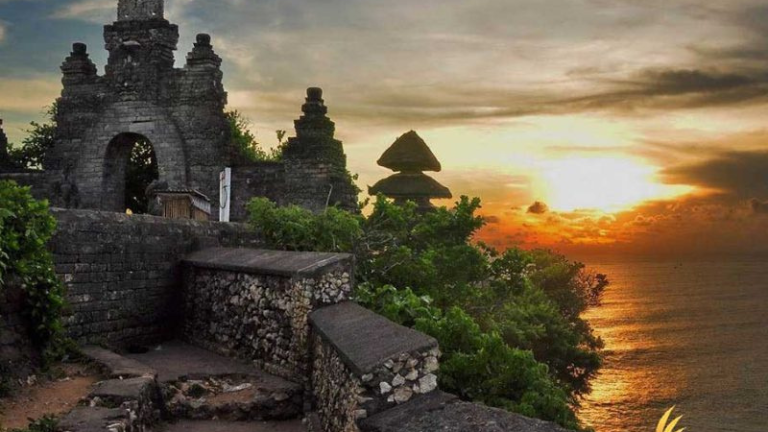
Uluwatu Temple, known in Balinese as Pura Luhur Uluwatu, is one of Bali’s most important sea temples, perched dramatically on a limestone cliff roughly 70 meters above the Indian Ocean on the southern tip of the Bukit Peninsula. Its development as a major place of worship is closely associated with the 16th-century Hindu priest Dang Hyang Nirartha, though evidence suggests the site held spiritual significance even earlier. Today, Uluwatu Temple is regarded as one of Bali’s six or nine directional temples (depending on the tradition cited) protecting the island from negative spiritual forces, and it remains one of the most visited sunset landmarks in South Bali.
As a Bali-based tour operator who has guided travelers across the Bukit Peninsula for over 30 years, I’ve seen how much more meaningful a visit becomes once people understand the real history behind the cliff, not just the sunset photo everyone comes for.
What Is Uluwatu Temple?
Uluwatu Temple is a Balinese Hindu sea temple (pura segara), built on a narrow cliff edge overlooking the ocean. It’s considered one of Bali’s most sacred temples due to both its dramatic natural setting and its role within the island’s spiritual protection system, which traditionally positions key temples around Bali’s coastline and mountains.
Where Is Uluwatu Temple Located?
The temple sits at the southwestern tip of the Bukit Peninsula in South Bali, within Pecatu village, a short distance from well-known beach areas like Padang-Padang, Bingin, and Balangan. It’s roughly 25–40 minutes from Jimbaran, and travel time from Seminyak, Canggu, or Kuta can range from 45 minutes to well over an hour depending on time of day — South Bali traffic, especially approaching sunset, can add significant delays, so fixed travel-time estimates should be treated as rough guidance rather than guarantees.
What Is the History of Uluwatu Temple?
Balinese historical and religious tradition holds that Uluwatu was significant as a place of worship before Dang Hyang Nirartha’s arrival, though much of its earliest history is undocumented in the way modern historical records would be. Nirartha, a Hindu priest traditionally credited with shaping much of Bali’s temple architecture and religious practice during the 16th century, is said to have visited Uluwatu during his travels along Bali’s coastline and contributed to the temple’s development, reinforcing its status as a major spiritual site.
It’s worth noting that, as with many ancient Balinese temples, firm archaeological dating of Uluwatu’s earliest structures is limited, and much of what is known comes from a combination of religious tradition, oral history, and later historical records tied to Bali’s royal courts rather than a single definitive source.
How Old Is Uluwatu Temple?
Balinese tradition associates Uluwatu’s major religious development with the 16th century through Dang Hyang Nirartha, though some accounts suggest parts of the site were used for worship earlier than that. As with other ancient Balinese temples, an exact founding date isn’t firmly established, and it’s more accurate to describe Uluwatu as having centuries-old origins that were formalized and expanded over time rather than built in a single period.
Who Built Uluwatu Temple?
No single documented builder is credited with Uluwatu’s full construction. Balinese tradition points to Dang Hyang Nirartha as the figure most closely associated with shaping the temple into the significant religious site it became, though the temple’s development likely involved contributions from local communities and Balinese rulers across subsequent centuries.
Who Is Dang Hyang Nirartha and What Is His Connection to Uluwatu?
Dang Hyang Nirartha was a Hindu priest and scholar, traditionally credited with significantly influencing Balinese Hindu religious practice, temple architecture, and literature during the 16th century. According to Balinese tradition, he traveled along Bali’s southern coastline, and Uluwatu was among the sacred sites where he is said to have meditated and taught before his final spiritual journey, some traditions describe this as the site where he achieved spiritual liberation (moksha). These accounts are part of Balinese religious tradition rather than independently verified historical record, but they remain central to why Uluwatu holds such deep religious importance today.
What Does the Name Uluwatu Mean?
“Ulu” means head or tip, and “watu” means rock or stone, together describing the temple’s location at the rocky tip of the peninsula, perched directly above the ocean cliffs.
Why Is Uluwatu Temple Important to Balinese Hinduism?
Uluwatu is considered one of Bali’s key directional temples (pura kahyangan jagat), traditionally understood to help spiritually protect the island, particularly from negative forces associated with the sea. Alongside temples like Tanah Lot, it forms part of a wider network of coastal sanctuaries that balance Bali’s inland mountain temples within Balinese Hindu cosmology.
Why Was Uluwatu Temple Built on a Cliff?
The cliff-top location reflects the Balinese Hindu belief that dramatic, elevated coastal points hold heightened spiritual power, serving as a meeting point between land, sea, and sky. Positioning the temple directly above the ocean also reinforced its role as a guardian site, watching over the waters believed to carry both blessings and spiritual threats toward the island.
What Is the Religious Significance of Uluwatu Temple?
Uluwatu remains an active place of worship, with ceremonies held regularly and larger temple anniversary festivals (odalan) drawing worshippers from across the region. It is not simply a historical monument, Balinese Hindus continue to visit for prayer, blessings, and significant ceremonies tied to the temple’s protective role.
What Is the Architecture of Uluwatu Temple Like?
The temple follows traditional Balinese architectural style, with split gateways (candi bentar), stone courtyards, and shrines built largely from black coral stone suited to the exposed, salty cliff-top environment. Much of the complex’s layout emphasizes a gradual ascent through gated courtyards toward the main shrine, consistent with the layered, increasingly sacred structure common to Balinese temple design.
What Are the Most Important Uluwatu Temple Facts?
Key facts about Uluwatu Temple:
- Located on a cliff roughly 70 meters above the Indian Ocean, Bukit Peninsula, South Bali
- Traditionally associated with the 16th-century priest Dang Hyang Nirartha
- Considered one of Bali’s directional temples protecting the island spiritually
- The name “Uluwatu” means “land’s end rock,” describing its cliff-top position
- Built using black coral stone suited to the coastal climate
- Home to a population of long-tailed macaques living around the temple grounds
- A popular sunset viewpoint, often paired with a traditional Kecak Dance performance
- Remains an active site of Balinese Hindu worship and ceremony
Why Is Uluwatu Temple Famous for Sunset?
Uluwatu’s cliff-top position gives it an unobstructed view over the Indian Ocean, making it one of South Bali’s most striking sunset locations. The combination of dramatic scenery and religious significance has made sunset at Uluwatu one of the most sought-after experiences for visitors to the Bukit Peninsula, though this also means late afternoon is consistently the busiest time to visit.
What Is the Connection Between Uluwatu Temple and the Kecak Dance?
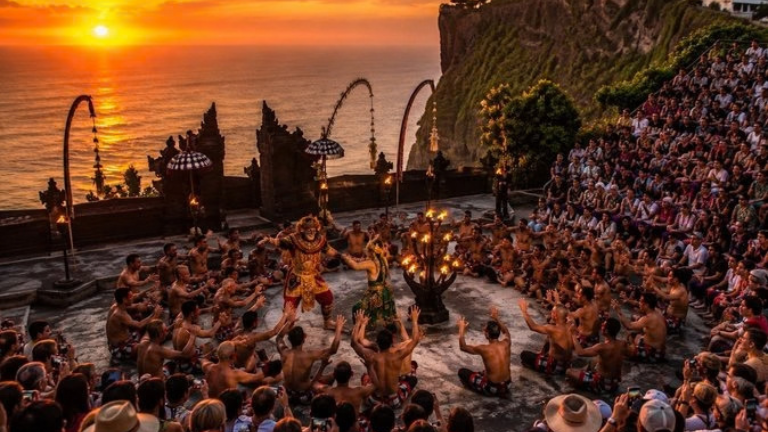
A traditional Kecak Dance performance is held in an open-air amphitheater within the temple grounds, typically timed around sunset. The performance, featuring a large chorus of chanting performers, depicts scenes from the Hindu Ramayana epic and has become one of the most iconic cultural experiences associated with a Uluwatu visit, though it is a cultural performance tradition rather than part of the temple’s core religious ceremonies.
What Should Visitors Know Before Visiting Uluwatu Temple?
Uluwatu is an active religious site, and visitor access is generally limited to outer courtyards and designated walking paths rather than the temple’s innermost sacred areas, which are reserved for worshippers. A sarong and sash are required and are usually provided at the entrance. Visitors should also be prepared for the resident long-tailed macaques around the temple, they’re known for snatching sunglasses, hats, food, and loose items, so it’s best to keep such belongings secured or out of reach while walking the cliff path.
Because Uluwatu is often combined with other Bukit Peninsula highlights, Padang-Padang Beach, Bingin, Balangan, Garuda Wisnu Kencana Cultural Park, or a seafood dinner afterward in Jimbaran, it’s worth planning realistically rather than assuming every stop fits comfortably around sunset traffic. A local Bali tour operator can help sequence the day based on your hotel location, sunset timing, and which Bukit Peninsula spots matter most to you.
What Is the Best Time to Visit Uluwatu Temple?
Late afternoon remains the most popular time, timed around sunset and the evening Kecak performance, though this is also when the temple and surrounding roads are busiest. For a quieter visit with fewer crowds, a mid-morning visit offers a calmer experience, with the trade-off being the absence of the sunset views the temple is best known for. As with entrance fees, opening hours, and performance schedules, it’s worth confirming current details before your visit, since these can change.
Frequently Asked Questions
How old is Uluwatu Temple? Its exact age isn’t firmly documented, but Balinese tradition closely associates its major development with the 16th century through Dang Hyang Nirartha, with some evidence suggesting the site held spiritual significance even earlier.
Why is Uluwatu Temple important to Balinese Hinduism? It is considered one of Bali’s key directional temples, traditionally believed to help spiritually protect the island, particularly from negative forces associated with the sea.
Who is Dang Hyang Nirartha and what is his connection to Uluwatu Temple? He was a 16th-century Hindu priest credited within Balinese tradition with significantly shaping the island’s temple architecture and religious practice, and is traditionally associated with Uluwatu’s development as a major sacred site.
Can tourists visit Uluwatu Temple? Yes, tourists are welcome in the temple’s outer courtyards and designated areas with appropriate dress, though access to the innermost sacred areas is generally reserved for worshippers.
Planning a sunset visit to Uluwatu Temple or a full day exploring the Bukit Peninsula? Docar Bali Tour can help arrange a private itinerary combining Uluwatu with nearby highlights like Padang-Padang Beach, Garuda Wisnu Kencana, or a seafood dinner in Jimbaran, timed around your hotel location, sunset, and interests. Message us on WhatsApp through docarbalitour.com to start planning.